China’s Sequin Patches manufacturers serve fashion labels, uniform suppliers, craft brands, and promotional-product buyers. The market is specialized, so broad textile figures offer context—not a direct measure of sequin-patch demand. Textile Exchange’s Materials Market Report 2024 estimated global fiber production at 124 million tonnes in 2023, up from 116 million tonnes in 2022. That scale underscores the importance of material choices and supplier transparency across textile supply chains.
Small details matter. Design expert Charles Eames said, “The details are not the details. They make the design.” His observation applies to sequin patches, where a few loose stitches, uneven shine, or rough backing can change a garment’s finish. It is a design principle, not a patch-specific industry endorsement. Buyers should compare sample quality, stitch density, edge finishing, backing options, and consistency between samples and bulk orders. Requesting clear specifications and production photos can also help reveal practical differences between suppliers.
This guide to China’s top 10 Sequin Patches manufacturers is intended as a starting point, not a final verdict. Rankings can miss important differences: one factory may excel at custom shapes, while another handles repeat orders more reliably. That distinction matters. Treat claims as questions to verify, and test samples under the intended use conditions before committing to an order.
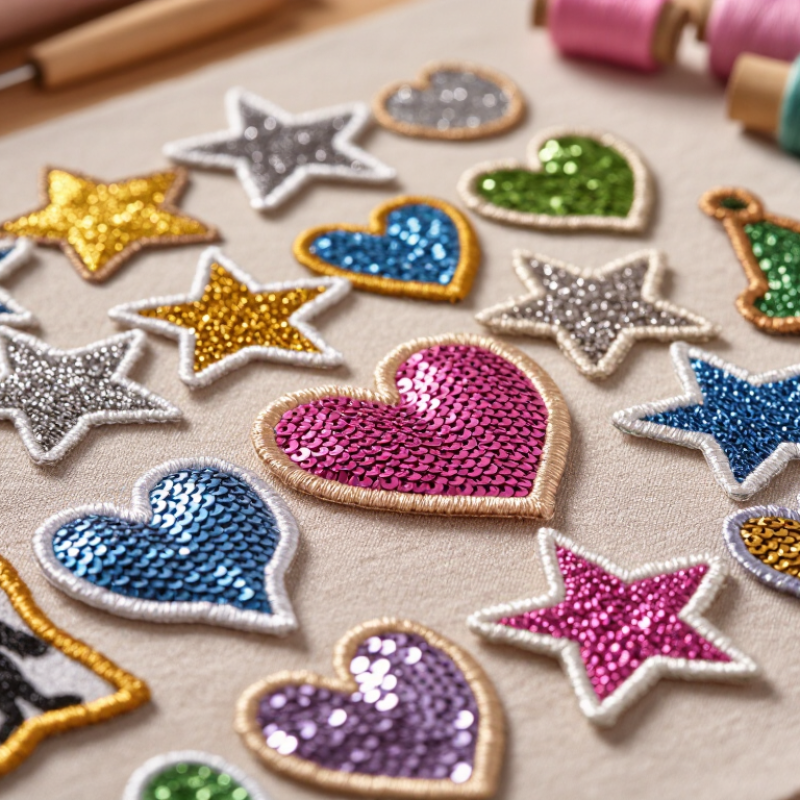
A sequin patch is a decorative piece made by attaching small reflective discs to a fabric base. The sequins may be sewn in rows, arranged around an embroidered shape, or combined with beads and thread. Their movement catches light, giving a garment a changing shimmer rather than a flat printed effect. Small details matter.
Patches are commonly used on jackets, T-shirts, dance costumes, stage clothing, backpacks, and handmade accessories. A star-shaped patch can brighten a child’s bag, while a larger motif may add sparkle to a performance outfit. They can also cover a small worn area, though the patch should be wider than the damaged spot for a neat finish. Placement affects comfort.
Attachment methods depend on the patch and the fabric. Sew-on patches offer a secure option for many garments, while heat-applied styles require suitable materials and careful temperature control. Always check the maker’s care instructions and test a hidden area before applying heat. Delicate fabrics may need hand stitching. One detail is easy to overlook: sequins can snag on loose knits or scratch skin when placed inside a collar. The best design is not always the brightest one; weight, edge finish, and washing needs deserve equal attention.
Sequin patches are decorative motifs made by attaching small, reflective discs to a fabric or mesh backing. The table below compares common patch types and applications; it does not rank or identify manufacturers.
| Patch Type | Typical Construction | Common Uses | Attachment Options | Practical Notes |
|---|---|---|---|---|
| Letter and number patch | Sequins stitched onto a shaped fabric backing, often with embroidered outlines | Jackets, sweatshirts, teamwear, and personalized apparel | Sew-on or heat-applied backing | Small lettering needs clear spacing so the design remains legible. |
| Logo-style patch | Sequins combined with embroidery or appliqué on a stable textile base | Uniforms, promotional clothing, bags, and event garments | Sew-on is generally suitable for frequent wear | Fine details may need embroidery or printed elements rather than sequins alone. |
| Floral motif patch | Sequins arranged as petals or accents, sometimes with bead or thread details | Dresses, blouses, skirts, and occasionwear | Sew-on or carefully applied fusible backing | Check the backing and decoration against the garment fabric’s heat tolerance. |
| Animal and character patch | Shaped patch with sequins used for color, texture, or highlights | Children’s clothing, costumes, backpacks, and casualwear | Sew-on or heat-applied, depending on backing | For children’s products, assess small-part and attachment risks for the intended age group. |
| Star and geometric patch | Sequins arranged in repeating shapes on woven fabric or mesh | Denim, streetwear, stage outfits, and accessories | Sew-on, adhesive, or heat-applied backing | A flexible backing helps the patch sit more smoothly on curved or soft surfaces. |
| Oversized statement patch | Large sequin area supported by a reinforced textile base | Jacket backs, performance costumes, and fashion apparel | Sew-on is often preferred for added support | A larger patch can add weight; check garment drape and seam strength. |
| Appliqué panel patch | A fabric shape embellished with sequins and finished edges | Costumes, dancewear, formalwear, and decorative clothing panels | Stitching around the perimeter or direct garment sewing | Edge finishing helps reduce fraying of the patch backing. |
| Mesh-backed patch | Sequins attached to an open or lightweight mesh base | Sheer garments, stagewear, and layered fashion pieces | Sew-on, with stitches placed carefully around the design | Mesh can be delicate; avoid excessive pulling during application. |
| Heat-applied sequin patch | Patch supplied with a heat-activated adhesive layer | DIY garment customization, craft projects, and selected accessories | Applied with heat according to the supplier’s instructions | Test on a hidden area; heat-sensitive fabrics may not be suitable. |
| Sew-on sequin patch | Patch with a fabric backing designed to be stitched to the item | Frequently worn garments, bags, and items that need a secure attachment | Hand or machine stitching, as appropriate for the item | Follow garment care instructions; sequins may be damaged by high heat or abrasion. |
Specifications and care requirements vary by backing, sequin material, adhesive, and garment fabric. Confirm attachment and cleaning instructions with the product supplier before production or use.
Check sequin alignment, edge stitching, color consistency, and backing adhesion. Look at both sides in daylight.
Send each supplier the same artwork, sequin size, backing, and thread colors. Compare the finished samples side by side.
Ask for wash and abrasion tests suited to the intended garment. Request written methods and acceptance criteria.
Request recent production records, inspection steps, and defect logs. Ask how rejected pieces are handled.
Ask for sequin and backing specifications, fiber details, and available sourcing records. Paperwork needs checking against samples.
Include sampling, revisions, production, and final inspection. Sewing days alone do not tell the whole story.
Request recent inspection records or production photos. A glossy sample can hide rough edges or uneven bulk results.
Compare sample consistency, test evidence, communication, delivery history, and total landed cost. A scorecard helps, but it can miss a difficult production day.
Not necessarily. Ask what caused the issue and review an improved sample. One test is not always the full picture.
This guide introduces Sequin Patches, explaining what they are and how they are used to add decorative detail to apparel, accessories, uniforms, and craft projects. It outlines the design and manufacturing process, from selecting fabrics, sequin shapes, colors, and backing materials to arranging and attaching the sequins for an attractive, durable finish. Readers will also learn which factors matter when evaluating manufacturers in China, including product quality, customization options, production capacity, communication, lead times, and quality-control practices.
The article presents profiles of 10 Chinese manufacturers to help buyers understand the range of suppliers available and compare their capabilities. It concludes with practical guidance for assessing samples, clarifying specifications, reviewing production arrangements, and matching a supplier’s strengths to a project’s needs. By considering these points together, buyers can make a more informed choice and find a manufacturer suited to their design, budget, and order requirements.

 Patch Factory