What Are Woven Patches and How Are They Made?

Time:2026-10-27 Author:Aria
0%

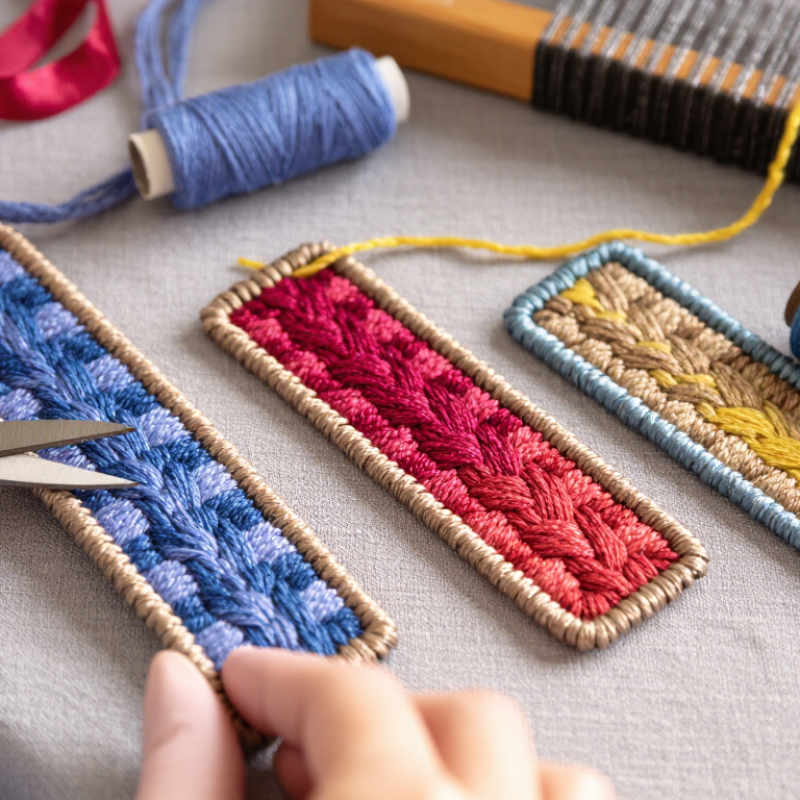
Woven Patches are fabric badges created by interlacing fine threads into a smooth, detailed surface. Unlike embroidered patches, they use tightly woven yarns instead of raised stitches. This structure allows small letters, thin outlines, and subtle color changes to remain clear. A well-made patch feels flexible, but its surface should still look compact and even.

The process begins with artwork preparation. Designers simplify complicated details and convert the image into a controlled thread layout. This step matters because woven fabric cannot reproduce every tiny gradient or photographic effect. The selected yarn colors are then arranged on a loom, where horizontal and vertical threads build the patch face. After weaving, the material is cut into individual shapes. Edges may receive merrow stitching, heat-cut finishing, or another suitable border. A backing, such as iron-on adhesive or hook-and-loop material, can then be attached for easier application.

Practical quality checks should not be skipped. Inspectors usually examine thread tension, lettering, edge strength, color accuracy, and backing adhesion. Even experienced manufacturers can miss a slightly uneven border. That detail may become obvious after washing or repeated handling. The final result depends on artwork, yarn selection, loom settings, and finishing methods working together. Understanding these choices helps buyers compare samples honestly and select patches that match their intended use, whether for uniforms, clubs, workwear, or branded merchandise. Small design adjustments often produce a noticeably cleaner result.
What Are Woven Patches and How Are They Made?

Definition and Key Features of Woven Patches

Woven patches are fabric badges made by interlacing fine threads on a loom. This process creates a smooth surface with detailed, compact designs. Unlike embroidered patches, woven patches use thinner threads. They can reproduce small letters, narrow lines, and subtle shapes more clearly. Their edges usually receive a clean border, which helps prevent fraying during regular use.

The key feature is detail. A well-made woven patch feels light and flexible, yet remains stable after repeated handling. The surface is generally flatter than embroidery. This makes it suitable for uniforms, bags, caps, workwear, and fabric accessories. In practical production, thread tension and color matching require careful control. A slight tension problem can distort a letter. I have found that very tiny details still need testing. A design may look perfect on screen but lose clarity after weaving.

Tips: Use bold shapes and readable lettering. Avoid overcrowding the artwork. Choose strong contrast between the background and design. Ask for a physical sample when accuracy matters. Check the backing type too. Sew-on backings offer durability, while heat-applied options provide faster placement. However, heat can affect delicate fabrics. This detail is easy to overlook. A patch should match both the design purpose and the material receiving it.

Materials and Equipment Used in Woven Patch Production

Woven patches are made by interlacing fine threads into a dense, smooth design. Polyester thread is common because it resists fading and holds sharp details. Rayon can create a softer sheen, although it may require gentler handling. The base fabric often needs a stable backing to prevent stretching during production. Small details matter here.

Production begins with artwork preparation. A technician converts the design into a weaving file, adjusting thread density, color changes, and edge proportions. Warping equipment places the lengthwise threads under controlled tension. A computerized jacquard loom then interlaces them with crosswise threads. This process creates a flatter surface than traditional raised embroidery.

After weaving, operators inspect the patch for loose threads, uneven edges, and color inconsistencies. Cutting equipment trims each piece, while an ultrasonic cutter can seal synthetic edges cleanly. Some patches receive sew-on backing, pressure-sensitive adhesive, or heat-activated film. A heat press applies controlled temperature and pressure, but the exact settings depend on the fabric and backing. Too much heat can distort both materials. Too little pressure may cause peeling.

Reliable production also depends on color references, sample approval, and batch records. In my experience, even a precise machine cannot correct unclear artwork. A tiny line may disappear when woven. That limitation deserves honest review before mass production. Human inspection remains necessary, especially around lettering and narrow borders.

Designing Artwork for a Woven Patch

Designing artwork for a woven patch starts with accepting the limits of thread. Woven surfaces create texture, but they cannot reproduce every tiny detail from a digital image. Keep it simple. Use bold shapes, clear spacing, and strong contrast between nearby colors. Thin lines may weaken during production, especially on small patches. A practical starting point is a line near 1 millimeter, but thread density can change this result. Ask a production specialist to confirm the minimum size before finalizing the design.

Prepare artwork as clean vector shapes whenever possible. Separate each thread color instead of relying on soft gradients or transparent effects. A dark outline can protect important details, while a lighter background improves readability. Small lettering needs extra care. Choose sturdy letterforms and test the actual patch size, not only the large screen preview. Details can disappear. I sometimes overdraw the first draft, then remove nearly half the decorative lines. That revision usually makes the design stronger. Requesting a digital proof and a physical sample can reveal uneven spacing, muddy colors, or lettering that feels too cramped. Even experienced designers miss these issues when working only on a monitor.

What Are Woven Patches and How Are They Made? - Designing Artwork for a Woven Patch

Category Dimension or Stage Typical Specification Artwork and Production Note
Patch Structure Base material A tightly woven fabric made from fine synthetic or rayon threads. The smooth surface supports small lettering and detailed line work better than heavily textured embroidery.
Patch Structure Surface texture Generally flat and flexible, with a low-profile appearance. Use woven patches when a clean, printed-like appearance is more important than a raised 3D effect.
Patch Size Common finished size Approximately 50–100 mm wide or tall, depending on the artwork proportions. The final size should be selected before artwork preparation because scaling affects text legibility and line thickness.
Artwork Preferred file format Vector artwork such as SVG, AI, EPS, or PDF is preferred. Vector files allow the design to be resized without losing edge sharpness and make individual colors easier to identify.
Artwork Color planning Use a clearly separated color palette with defined color values. Each visible color normally requires a separate thread color, so reducing unnecessary shades can simplify production.
Artwork Small text Letters should be tested at the actual finished patch size. Small text can lose clarity when woven; choose simple typefaces, adequate spacing, and short wording whenever possible.
Artwork Fine lines Very thin strokes may merge or become inconsistent during weaving. Use visibly strong outlines and avoid relying on hairline details, isolated dots, or tightly packed patterns.
Artwork Bleed and border Include a clear outer border or safe area around important design elements. Keep essential text and symbols away from the edge so they are not affected by trimming or edge finishing.
Production 1. Artwork preparation The design is checked for size, color count, line clarity, and legibility. A production-ready proof should show the actual dimensions and a simplified thread-color reference.
Production 2. Loom setup Threads are arranged on a loom according to the planned color layout. The weave structure and thread placement determine the appearance of solid areas, outlines, and fine details.
Production 3. Woven fabric creation Warp and weft threads interlace to form the design and its fabric base. Unlike an embroidered patch, the image is formed within the fabric rather than stitched on top of it.
Production 4. Cutting and finishing The woven fabric is cut into the required shape and finished around the edge. Common edge options include a clean cut edge or an overlocked border; the selected finish affects the final outline.
Attachment Sew-on backing The patch is sewn directly onto the garment or accessory. This option is suitable for items that can be stitched and is generally durable after repeated use.
Attachment Hook-and-loop backing A detachable fastening system with matching hook and loop surfaces. Useful when the patch needs to be removed or exchanged, provided the garment has a compatible receiving panel.
Quality Check Final inspection Check dimensions, edge quality, color consistency, loose threads, and design legibility. Reviewing a physical sample or accurately scaled proof is the safest way to confirm that small artwork details remain readable.

Step-by-Step Process of Making Woven Patches

Woven patches are made by interlacing fine yarns on a loom, creating sharp details and a smooth surface. The process begins with artwork conversion. A technician simplifies tiny shapes, selects thread colors, and prepares a digital weaving file. Textile Exchange’s 2024 Materials Market Report states that polyester represented about 59% of global fiber production in 2023. This helps explain its frequent use in durable patch yarns.

The loom then weaves the design row by row. Tension must remain steady, or lettering may look uneven. After weaving, workers inspect the patch under strong light. They trim loose threads, cut the shape, and seal the edges with stitching or heat. The backing is applied afterward, depending on whether the patch needs sewing, pressing, or temporary placement. Quality checks should include color accuracy, edge strength, size, and wash resistance. Small errors remain possible. Digital previews do not always show fabric distortion.

Tips: Keep lettering bold and limit very thin lines. Request a physical sample before a large production run. Check the patch after washing, not only when new. A 2024 report from the International Textile Manufacturers Federation noted continuing pressure on textile producers to improve efficiency and manage material costs. Reducing unnecessary colors can lower setup complexity, but excessive simplification may weaken the original artwork. Balance matters.

Common Uses and Care Guidelines for Woven Patches

Woven patches are fabric labels made from tightly woven threads, not raised embroidery. Their fine construction creates clean lettering, sharp outlines, and detailed symbols. Manufacturers program a design, weave colored threads into a backing, and cut each patch to shape. Heat-seal adhesive, sewing, or hook-and-loop backing can secure it.

Their common uses include uniforms, workwear, backpacks, caps, club clothing, and event merchandise. They also help identify teams without heavy decoration. Small text usually remains clearer on a woven patch than on thick embroidery. According to Grand View Research’s 2024 custom apparel report, personalization and short production runs continue driving demand for decorated clothing. That trend suits woven patches, especially when organizations need limited quantities. Still, tiny details can merge. A sample is worth checking.

Care depends on the backing. Sewn patches normally tolerate regular washing better than heat-sealed versions. Turn the garment inside out, use cool water, and choose a gentle cycle. Avoid chlorine bleach and aggressive stain removers. High dryer heat may soften adhesive or curl the patch edge. Air drying is safer. The 2024 Textile Exchange Materials Market Report states that recycled polyester made up about 14% of global polyester fiber production in 2023, so recycled threads may appear in newer patches. Fiber content still varies, and labels can be incomplete. WRAP research reports that extending clothing life by nine months can reduce its carbon, water, and waste footprints by 20–30%. Careful washing matters.

What Are Woven Patches and How Are They Made?

Woven patches are textile badges made by interlacing warp and weft threads on a loom. They are commonly used on uniforms, bags, jackets, hats, workwear, and accessories because their tightly woven surface can display fine lettering and detailed designs.

Common Care Guidelines

Wash woven patches according to the garment label. Cold washing at 30°C is generally the gentlest option, while higher temperatures may increase the risk of fading, adhesive damage, or edge fraying. Turn garments inside out, avoid chlorine bleach, and air-dry whenever possible.

FAQS

What are woven patches?

Woven patches are fabric badges made by interlacing fine threads on a loom. They have a smooth, flat surface. They show small letters and narrow lines clearly. Details matter.

How do woven patches differ from embroidered patches?

Woven patches use thinner threads and create a flatter finish. Embroidered patches usually have more raised texture. Woven designs often suit compact artwork and small lettering.

Which materials are commonly used?

Polyester thread is common because it resists fading and keeps details sharp. Rayon can provide a softer sheen. It may need gentler handling. A stable backing helps prevent stretching.

How are woven patches produced?

A technician converts the artwork into a digital weaving file. The loom interlaces lengthwise and crosswise threads row by row. Workers then inspect, trim, cut, seal, and attach the backing.

What artwork works best for woven patches?

Use bold shapes and strong contrast. Keep letters readable. Avoid crowded designs and extremely thin lines. A tiny line may disappear after weaving. Not always obvious.

Why should I request a physical sample?

Screen previews cannot show every fabric distortion. A sample reveals letter clarity, color accuracy, edge quality, and actual size. I would request one before large production.

Which backing should I choose?

Sew-on backing offers durable attachment for regular use. Heat-activated backing allows faster placement. Heat may damage delicate fabrics. Pressure-sensitive backing can suit temporary placement.

How can woven patches be checked for quality?

Inspect loose threads, uneven edges, color differences, and distorted lettering. Check edge strength, size, and wash resistance. Examine the patch under strong light. Human inspection still matters.

Can woven patches be washed?

They should be checked after washing, not only when new. Care depends on the thread, backing, and receiving fabric. Excessive heat may cause distortion or peeling. The safest setting is not always clear.

Conclusion

Woven Patches are fabric badges created by interlacing colored threads to form a smooth, detailed design. Compared with thicker embroidered patches, they offer a flatter surface, sharper lettering, and a refined appearance, making them suitable for clothing, bags, uniforms, accessories, and decorative projects. Their quality depends on the chosen threads, base fabric, backing material, stitching equipment, cutting tools, and finishing methods.

Producing Woven Patches begins with preparing clear artwork that uses simple shapes, readable text, balanced colors, and appropriate detail for the patch size. The design is then converted into a weaving pattern, threads are selected, and the patch is woven on specialized equipment. After weaving, excess material is trimmed, edges are finished to prevent fraying, and a backing such as sew-on, adhesive, or hook-and-loop material may be added. For long-term care, patches should be protected from harsh chemicals, excessive heat, and rough washing; gentle cleaning and careful storage help preserve their colors, shape, and surface.

Aria

Aria

Aria is a dedicated marketing professional with a deep passion for innovative strategies and a keen understanding of our company's product offerings. With a wealth of experience in the industry, Aria excels at crafting engaging content that highlights the unique features and benefits of our......